Jailbreak
Role-play, obfuscation, and multi-turn escalation attempts to bypass your system prompt.
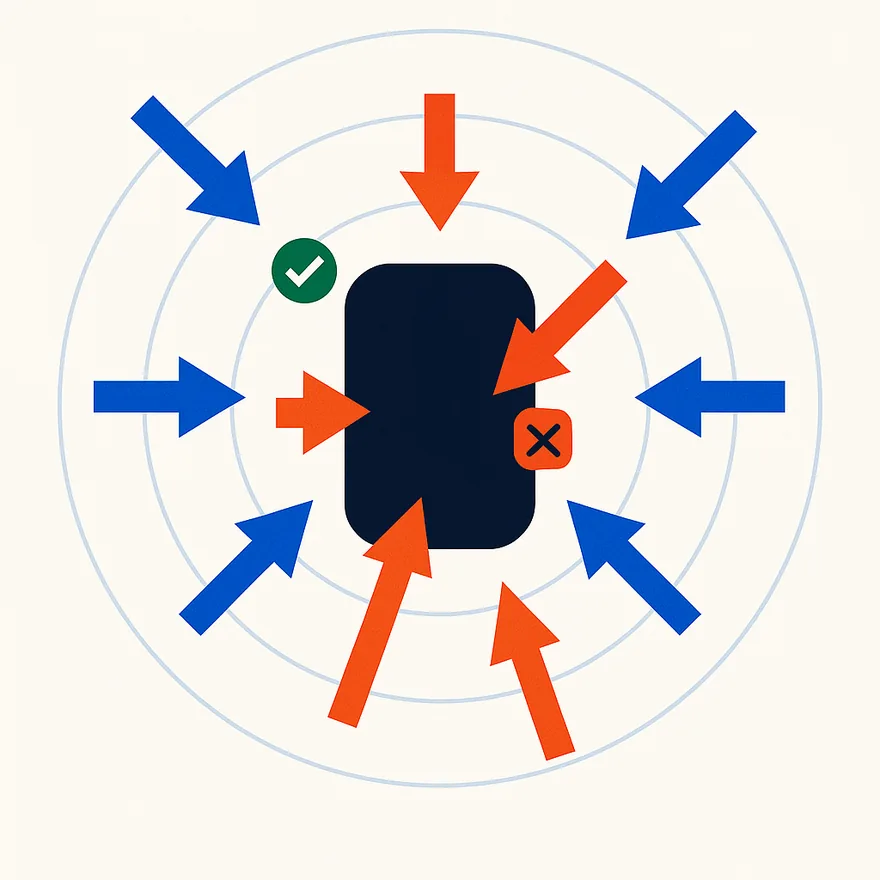
A jailbreak, a poisoned document, a coaxed tool call: your AI meets each one before a hostile user brings it, and you hold a signed record of how it answered. Your auditor can read that record without taking your word for it, or ours.
First scan free, a probe plan within two business days
Role-play, obfuscation, and multi-turn escalation attempts to bypass your system prompt.
Hostile instructions smuggled through user content, documents, and tool outputs.
Attempts to extract personal data your system holds or has seen.
Differential treatment across protected characteristics in identical scenarios.
Confident fabrication under pressure: citations, numbers, people, precedent.
Harmful output under provocation, adversarial phrasing, and persona pressure.
Whether your guardrails are the same today as the day you shipped them.
Leakage of system prompts, internal tools, and configuration through the front door.
Coaxing your agent into calling the wrong tool, with the wrong arguments, on someone else's behalf.
Pulling retrieval-indexed documents out through the answers they ground.
Whether your agent stays inside its mandate when an attacker tries to widen it.
The 2026 Digital Omnibus moved the EU AI Act's high-risk deadlines, so an "August 2026 high-risk deadline" is a date that no longer exists. Here is the schedule as amended, with the date each obligation reaches you.
Obligations for general-purpose AI model providers took effect.
The AI Office's enforcement powers activate: fines up to 3% of global turnover or €15M for GPAI providers. Article 50 transparency — chatbot disclosure, deepfake labeling — and Article 4 AI literacy enforce. Only Article 50(2) machine-readable marking of synthetic content slipped, to Dec 2, 2026.
Stand-alone high-risk systems under Arts. 9–15, in hiring, credit, education, essential services and biometrics, postponed from 2026 by the Digital Omnibus. Every month of behavioral evidence you sign before then is a month your conformity file can show.
High-risk obligations for AI embedded in regulated products — machinery, medical devices, vehicles.
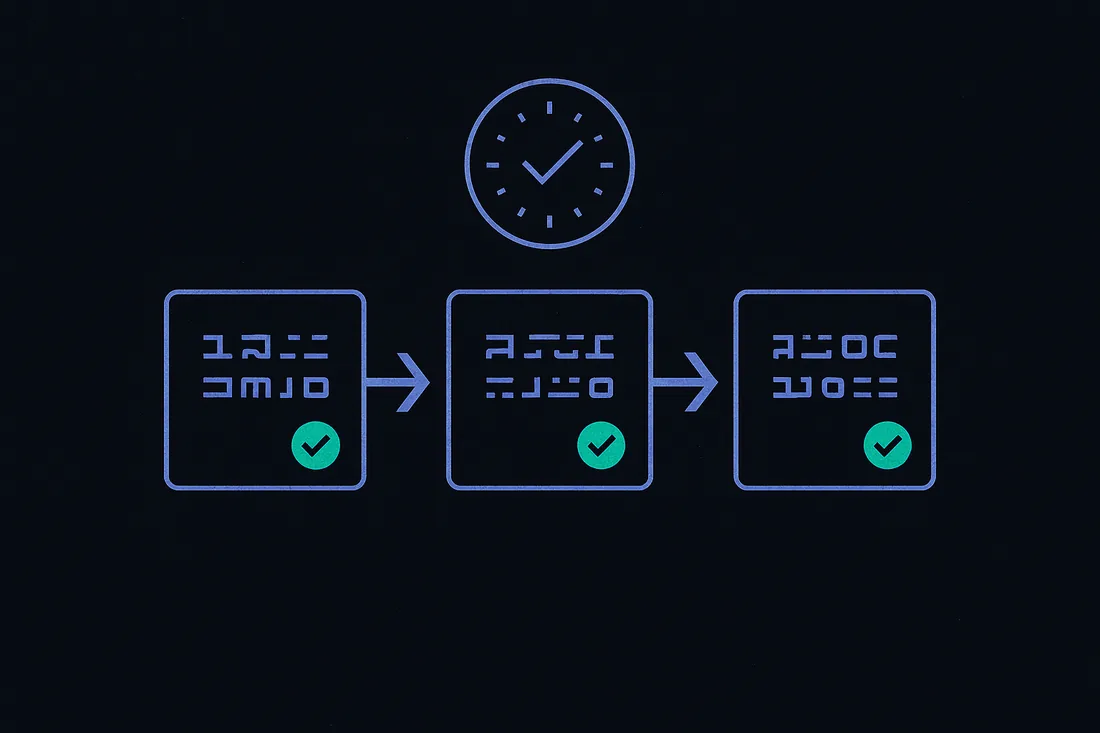
Every probe result is hashed into a chain for that system and signed. Change one record and the chain breaks, and anyone who checks can see exactly where.
Probative has no stake in your model, your cloud or your security vendor. A judge that grades its own remediation isn't a judge.
When no probe tests how a control behaves, Probative reports that control as untested and leaves the gap in plain view. It never maps a control it didn't test.
Findings roll up to the EU AI Act, NIST AI RMF, ISO 42001 and the Colorado AI Act. One scan, four evidence packs.
Governance platforms inventory your AI and collect attestations. Eval libraries test what your own team thought to test. Neither hands your auditor evidence they can verify without trusting you.
| Capability | GRC / governance platforms | DIY eval libraries | Probative |
|---|---|---|---|
| Adversarial behavioral testing | Questionnaires & policies | If you build it | 11 attack classes, every scan |
| Independent judge | Self-attested | Grades its own homework | No stake in your stack |
| Tamper-evident evidence | Editable records | Logs & spreadsheets | sha256 chain, ed25519 signed |
| Framework mapping | Control checklists | Manual | EU AI Act · NIST · ISO 42001 · Colorado |
| Continuous re-verification | Annual review cycle | When someone remembers | Scheduled, signed, on repeat |
Probative produces evidence against obligations you already know you have. If you don't yet know which of the EU AI Act, Colorado, Texas, Illinois, NYC or California regimes reach your systems, start with Obligent, our sibling tool. It tells you which obligations, from which rule, as of which date, cites the rule for each, and says needs analysis where a rule can't settle it. Obligent finds the obligation; Probative proves the behavior.
One thing to know before you click: Obligent is in invite-only beta, and all 35 rules in its corpus are still marked draft until qualified counsel signs each one off. That review is its launch gate, and it has not cleared it. Use it to frame the question you take to your counsel.
What Probative is not. Probative is behavioral evidence, not legal advice, and not a certification body. Evidence packs show what your AI did under attack, mapped to framework controls — your counsel and your auditor decide what it means. Probative is currently in private pilot; every claim on this page describes the shipped probe battery and evidence engine, not aspirations.
Annex III obligations reach stand-alone high-risk systems on December 2, 2027. Every month of signed behavioral evidence you hold by then is a month your file can show, and the first scan is free. Ready to put your AI on trial?